
The Long Middle

This morning, the cold hurt before I reached the corner.
One of the drugs I take turns cold into pain.
Winter now arrives inside my body.
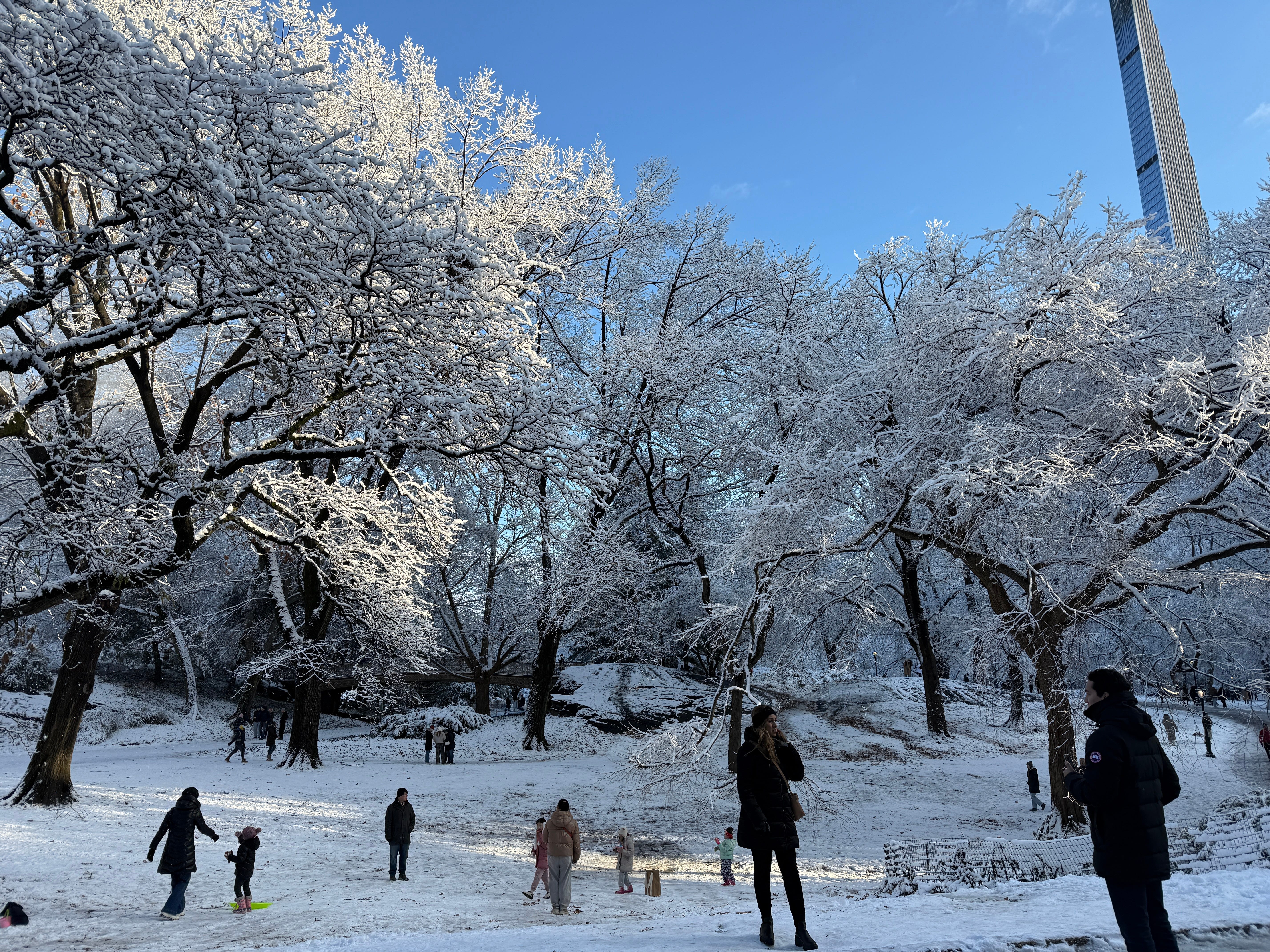
New York is beautiful in snow—the softened edges, the city briefly blurred—
but the cold feels charged now, as if it might fracture if I move too quickly.
I am almost five years into this world of cancer, a parallel jurisdiction.
The clocks still tick.
The seasons still change.
But the notion of “next” dissolves here,
and impermanence becomes ordinary.
Five years can sound reassuring.
It is not.
Without a decisive medical breakthrough, there is no dependable horizon.
What many of us carry quietly—the sense of years enough to make plans,
to change course, to circle back—
no longer holds my days together.
Lately, I have been turning inward more deliberately.
Long meditation sits. Slow yoga. Walks without destination.
A season of wintering.
Not a retreat from the world, but a way of listening.
I am trying to learn what this season is asking of me,
to stay close enough to hear it.
When I was first diagnosed, another year felt unlikely.
I imagined time with a clear architecture—an arc,
a narrowing,
a final gathering-in.
The future already felt as if it were closing,
even as I stepped into it.
I arranged my life around that understanding.
I prepared my son for my absence—not the same as preparing him for my death, but what I could manage.
I put my affairs in order.
I began this Substack to give public form to a kind of writing I had long kept private. And I chose to concentrate my philanthropic work in one place, establishing a legacy fund at the International Legal Foundation (ILF) to continue beyond me.
Those choices were made in the shadow of an expected ending.
What followed was something else, unimaginable then: a long middle that keeps extending.
I am no longer arranging my life around my imminent death,
but I am not free to live in any straightforward way either.
I am suspended inside a living pause—
no arrival, no departure,
only the breath moving in and out.
So I measure time differently now.
What once would have been a full personal or professional chapter—a mission, a country, the half-life of one of my identities—has unfolded instead inside infusion rooms, scan cycles, and blood counts.
What I did not understand then—and am only beginning to now—is how to live when death is no longer so close, but neither is the future dependable.
Every other week, my clinical-trial life contracts into a single trajectory between New York and Houston. At MD Anderson, checking in again, it can feel as if I never left.
The fluorescent light at the airport gate feels harsher each time,
as if it has learned my name.
After treatment, I vanish for days—sometimes a week—into fatigue, nausea, isolation.
Then I reappear. Not restored—just returned.
I have recently learned that bulky nodal metastatic disease is pressing up against my bronchi, esophagus, heart, and great vessels. Radiation is being recommended to prevent lung collapse—an intervention whose risks rival those of inaction, and may not appear for months.
Living this way rearranges my sense of time. The future no longer opens outward; it pulls inward, contingent and conditional.
Until five years ago, my life moved outward, toward other people’s needs. This was not only my adult work; it was the shape of a role learned much earlier—to move toward what was breaking, to try to steady it.
Illness collapses that geography. The travel, the waiting, the vigilance now return me, again and again, to my own body. To have one’s purpose narrowed like this
carries its own grief—especially when the world is on fire.
I feel that familiar pull toward what is breaking, the wish to move, to help. But the limits of my body set the terms now.
There is another reality threaded through this period:
the cognitive unreliability that comes with chemotherapy. I no longer fully trust my mind—to hold energy, to sequence thought, to recognize when what I am experiencing is grief, and when it is depression. Some days the narrowing feels circumstantial; other days it feels written into my blood.
I am deeply grateful for the limited coaching and consulting I am still able to do—work that keeps me, in some small way, oriented toward the world. Last month, that included traveling to Afghanistan with the ILF. Before diagnosis, I had imagined this work not in fragments, but whole years shaped around its purpose.
There is a particular ache in watching others move into the wide middle of life—new challenges, new work, new freedoms—new shapes of purpose unfolding across their days.
Their lives feel wide with momentum. Mine, for the moment, feels exacting and small.
I listen to the grief and let it be what it is. I stop measuring my life against the lives moving past me, and stop rehearsing the life that never took shape.
Longing often arrives before clarity does—a pull without an object, a sense that something matters even if I cannot yet name it. Longing is its own kind of knowing. It points, without explaining.
When I stay with it, the pull clarifies—not into a solution or a plan, but into a direction. I follow it. It still feels like love.
It leads me into the small places where my life still opens.
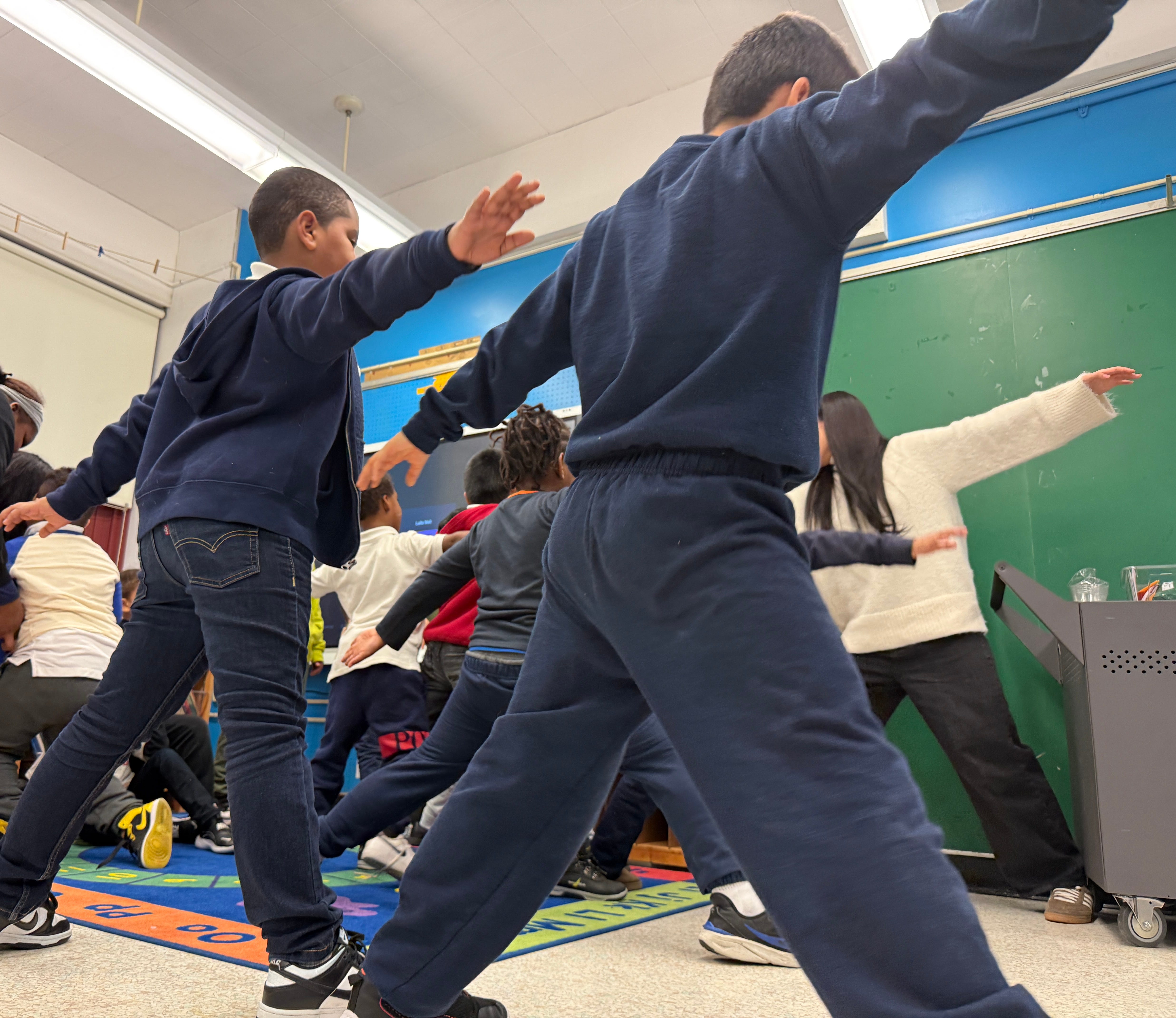
On Mondays, I teach yoga to pre-K through second graders after school in the Bronx—small bodies wobbling in tree pose, laughter spilling across the room. This is not the work I imagined for this chapter of my life. Still, it asks exactly what I can give: presence.
After my last cat died, I told myself I was done—that I couldn’t take on that kind of love, and that kind of loss, again. And yet the practice of showing up kept pointing me, quietly, toward animals.
What I had somehow forgotten—truly forgotten—was that visiting animal shelters almost never means coming home alone. I went unprepared. I had no story ready. I went in “just to look,” which is never how these stories go. And still, here she is.
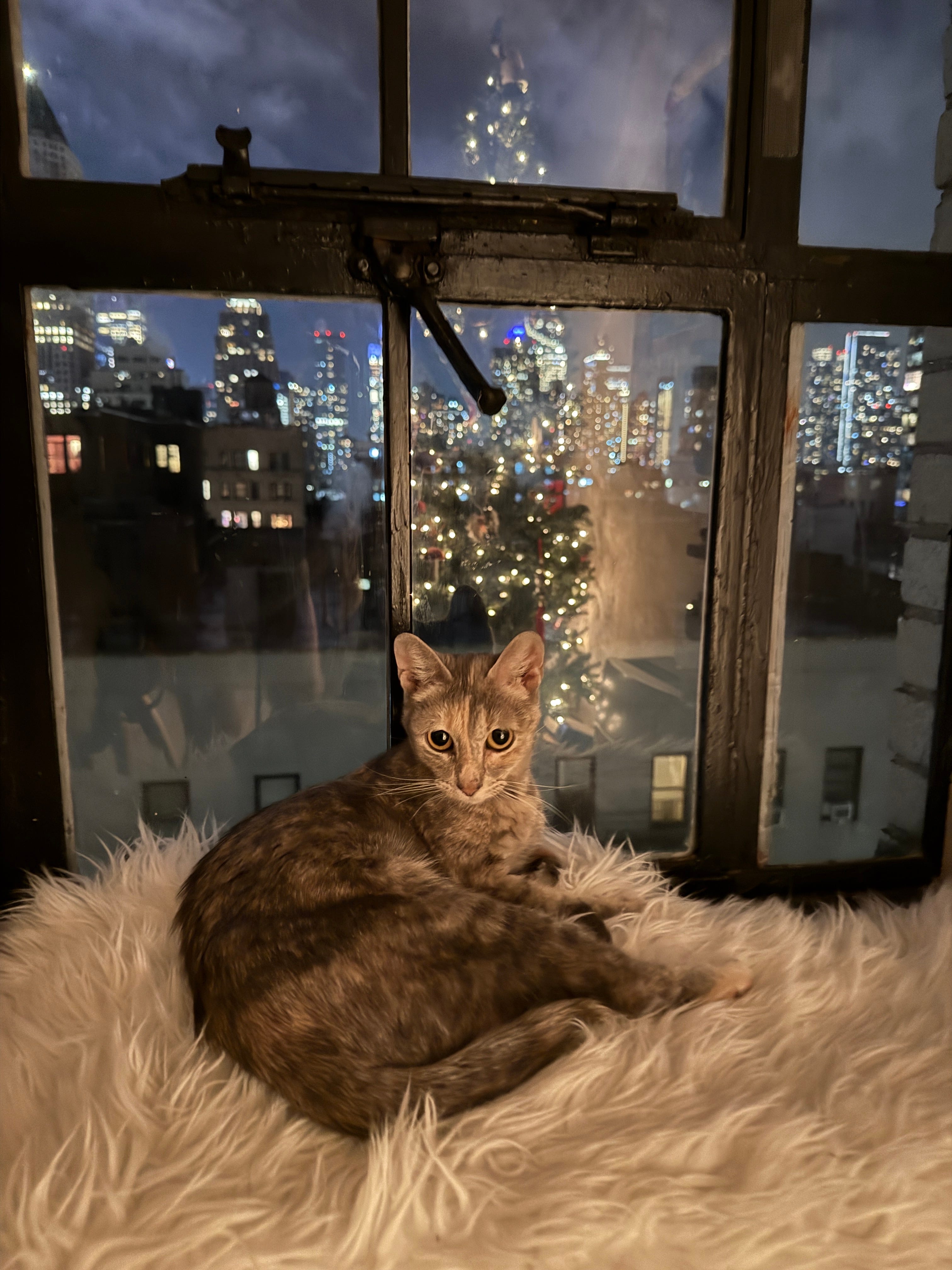
Her name is Darya. She weighed 3.9 pounds when she was brought into a local shelter a week ago—severely emaciated, ill, nearly gone. I did not plan for this. The decision arrived whole, as these things sometimes do, before I had time to explain it to myself.
There was almost a dog, too—one with no front legs, which felt like a very ambitious beginning, given that I have never had a dog at all. The dogs are the ones who undo you the fastest: so vocal, so exposed, so plainly in need.
For now, Darya and I have been nesting. We are both creatures learning how to heal, to continue, and to love.
Most days now, I am not trying to plan anything. I am practicing a quieter discipline: noticing where my attention goes, and turning it back when it strays too far into fear or rehearsal.
The dark still arrives. The facts remain. But something else remains: the ability to stay present.
Some days that presence takes the form of a room full of six-year-olds laughing themselves out of balance. Some days it is the steady weight of a small, healing body pressed against my side.
This is how I live inside the long middle—not by resolving it, but by listening.
If you’re reading this from a season of waiting or uncertainty, I’d be love to hear what helps you stay present inside it.
Dear Stephanie,
Your writing is incredibly moving, words falling gently as a snowflake, even within pain.
Reading of how you have ‘cleaned house’ over these past five years, I wonder how many people can say the same. How many of us make and leave mess all around us and push away such work. The place of stillness and listening you have arrived at has been worked for. A different space, a unknown season, not without new challenges – yet present still. And full of feeling.
I imagine that for many people, teaching yoga to children in the Bronx, while consulting and coaching here and there would feel like engagement in some kind of ‘middle’ – without living in a place of grief. If you are present in what you do, surely it will have an impact beyond that which you can perceive, the child who goes home feeling happy and remembers that feeling. Without arriving at this place, Darya wouldn’t be purring the way she is.
So, yeah, having some kind of ‘faith’ that there is value still to be had, even if we can’t see it, that there are still connections to be felt and made, that every little thing does matter.
For me personally, I move through this challenging season by granting the smallest of gifts to myself – to honour the act of drinking something warm and remaining still, of welcoming that moment, however small. And not expecting much more than that. Then suddenly being aware of moments of felt connection, an arm linked within my own, if only for a moment, a hand on the shoulder, the neighbour’s cat purring.
So well said and relatable. It is a hard bubble to live in and sometimes even harder to leave to live outside of like we did before. Thank you for your words and story. Wishing you blessed holidays and a year ahead that brings moments of joy and love.